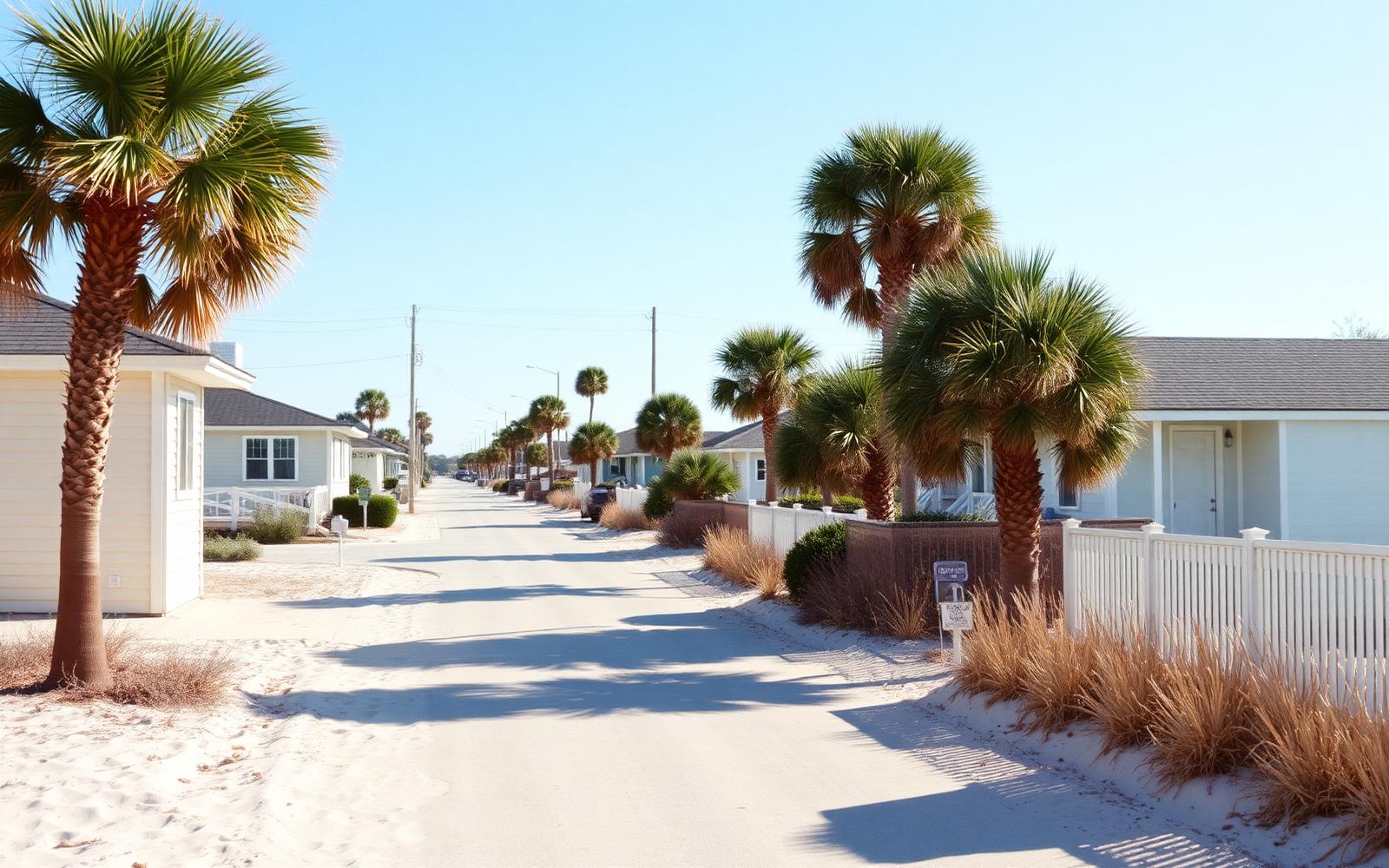
Epoxy Flooring Contractor · Atlantic Beach, SC
Epoxy Flooring in Atlantic Beach
Built to Perform. Finished to Impress.
At Expert Epoxy Installation we install epoxy flooring over properly prepared concrete to create a cleaner, more durable surface that suits your garage’s use, appearance, and budget. Atlantic Beach garages face sand, humidity, vehicle traffic, oil, and occasional moisture.
- 20+ years of flooring experience
- Epoxy, polyaspartic & polyurea systems
- Honest, upfront pricing
- Serving the Grand Strand
- 20+ years of flooring experience
- Honest, upfront pricing
- Epoxy, polyaspartic & polyurea systems
- Serving the Grand Strand
Epoxy Flooring for Atlantic Beach Homes and Businesses
A well-prepared epoxy floor can help protect your garage slab from stains, dust, chemicals, and everyday wear while making routine cleaning easier. Our team brings more than 20 years of flooring experience to each project, with clear pricing, careful preparation, and professional installation.
4214 Mayfair St, Suite 215, Myrtle Beach, SC 29577What Are The Benefits Of Epoxy-Coated Garage Floors?
For garages in Atlantic Beach, SC, an epoxy coating creates a sealed surface that handles daily vehicle use, resists common stains, and makes the space brighter and easier to maintain. Proper preparation and careful installation help the coating perform reliably in a coastal climate.
How Durable Is Epoxy Against Vehicle Traffic?
Epoxy forms a strong bond with prepared concrete, creating a dense surface that withstands tire traffic, foot traffic, and routine garage activity. It helps protect the slab from abrasion caused by parking, turning, moving equipment, and occasional dropped tools.
We inspect the concrete before installation and address cracks, surface damage, and moisture concerns instead of covering them prematurely. Thorough grinding or other appropriate preparation improves adhesion and reduces the risk of peeling or premature wear. Most homeowners here begin with garage epoxy.
A quality coating system can also protect the concrete from road grit and seasonal moisture brought in by vehicles. We select the system and finish based on the garage’s use, expected traffic, and the homeowner’s maintenance preferences.
How Well Does Epoxy Resist Stains And Moisture?
Epoxy creates a nonporous finish that helps keep oil, automotive fluids, dirt, and many household chemicals from soaking into the concrete. We can usually remove spills more easily when we clean them promptly with suitable products and avoid abrasive methods that may dull the surface.
Atlantic Beach garages may also encounter humidity, rainwater, and moisture carried in from coastal conditions. Epoxy does not eliminate underlying moisture problems, so we evaluate the slab and recommend appropriate preparation before coating it.
The finished floor simplifies routine care: sweep away sand and grit, then mop with a compatible cleaner. We also explain curing times and maintenance requirements so the coating reaches its intended performance before vehicles return.
Does Epoxy Improve Appearance And Light Reflection?
Epoxy gives a garage a clean, finished appearance without the unfinished look of bare concrete. We can help coordinate solid colors, decorative flakes, and surface textures with the home’s style and the garage’s intended use.
The coating’s smooth finish reflects more available light than a dull, stained slab, which can make the space easier to use for parking, storage, or projects. Decorative flakes can also add visual texture and help make minor surface debris less noticeable between cleanings. Homeowners comparing blends often review our decorative flake.
We focus on details that affect the final result, including edges, transitions, repairs, and consistent coverage. Our team provides clear pricing and practical recommendations so the selected color and finish suit the space, budget, and expected maintenance.
How Do You Select The Right Epoxy System?
A durable garage floor starts with accurate slab preparation, then depends on selecting coatings, colors, and finishes that match how you use the space. Atlantic Beach’s coastal moisture, vehicle traffic, oil exposure, and cleaning needs should guide both the system and installation plan.
What Does Surface Condition And Concrete Preparation Involve?
We inspect the concrete for moisture, cracks, control joints, old paint, oil, and weak or flaking areas before recommending an epoxy system. New slabs need sufficient curing time, while older floors may require degreasing, repairs, or removal of previous coatings.
Mechanical preparation, such as diamond grinding, usually creates a better bonding profile than light acid etching. We repair cracks and damaged areas, remove contaminants, and address uneven sections before applying primer or epoxy. Slabs with structural defects may need crack repair first.
Moisture testing also matters because vapor moving through the slab can cause bubbling, peeling, or cloudy areas. We explain the required preparation and include it in our upfront estimate. Our 20+ years of flooring experience helps us identify conditions that could affect the finished floor before installation begins.
Which Color, Flake, And Finish Options Work Best?
We help homeowners select a color and texture that fit the garage, surrounding floors, and maintenance routine. Solid colors create a clean appearance, while decorative vinyl flakes add visual variation and can help make minor dust or dirt less noticeable.
Flake coverage can range from partial to full broadcast. We also discuss the size and color blend because darker combinations may show dust, while lighter blends can brighten an enclosed garage. A clear polyaspartic topcoat can provide added resistance to abrasion, vehicle fluids, and routine cleaning.
Finish choice affects safety as well as appearance. We can add a suitable texture for traction, especially where water may enter from vehicles or coastal weather. We review samples before application so the selected system matches your style and budget.
What Do Professional Installation Considerations Include?
A complete system commonly includes preparation, repairs, primer when needed, a body coat, decorative flakes if selected, and a protective topcoat. We coordinate these materials for proper compatibility instead of treating each layer as an unrelated product.
Temperature, humidity, slab moisture, and recoat windows affect application and curing. Atlantic Beach conditions can change quickly, so we monitor the work area and follow product requirements for installation and return-to-service timing. Sun-exposed garages often benefit from polyaspartic coatings .
We provide a clear scope of work, explain expected downtime, and protect adjacent areas during installation. Our team maintains an organized workspace, pays attention to edges and transitions, and communicates throughout the project.
What Do Atlantic Beach Climate And Maintenance Needs Require?
Atlantic Beach garages face humid air, coastal salt, sand, rain, and frequent temperature changes. We address moisture during installation and recommend simple cleaning habits that help protect the coating, reduce surface wear, and keep the garage easier to maintain.
How Do You Manage Humidity And Salt Air?
High humidity can slow curing and allow moisture to remain in the concrete. Before coating, we check the slab for moisture, remove contaminants, repair cracks, and mechanically prepare the surface so the system can bond properly. We also plan installation conditions carefully instead of applying products when condensation or excessive moisture could affect the finish.
Salt carried by coastal air, vehicles, and footwear can leave a residue on the floor. Rinse or damp-mop the garage when residue becomes visible, then remove standing water rather than allowing it to dry repeatedly on the coating. Use entry mats near doors to capture sand and moisture, and improve ventilation when possible.
We select a coating system based on the garage’s exposure, use, and condition. Our detailed preparation and clean installation practices help reduce problems caused by contaminants, weak concrete, and poorly finished edges.
What Does Routine Cleaning And Long-Term Care Involve?
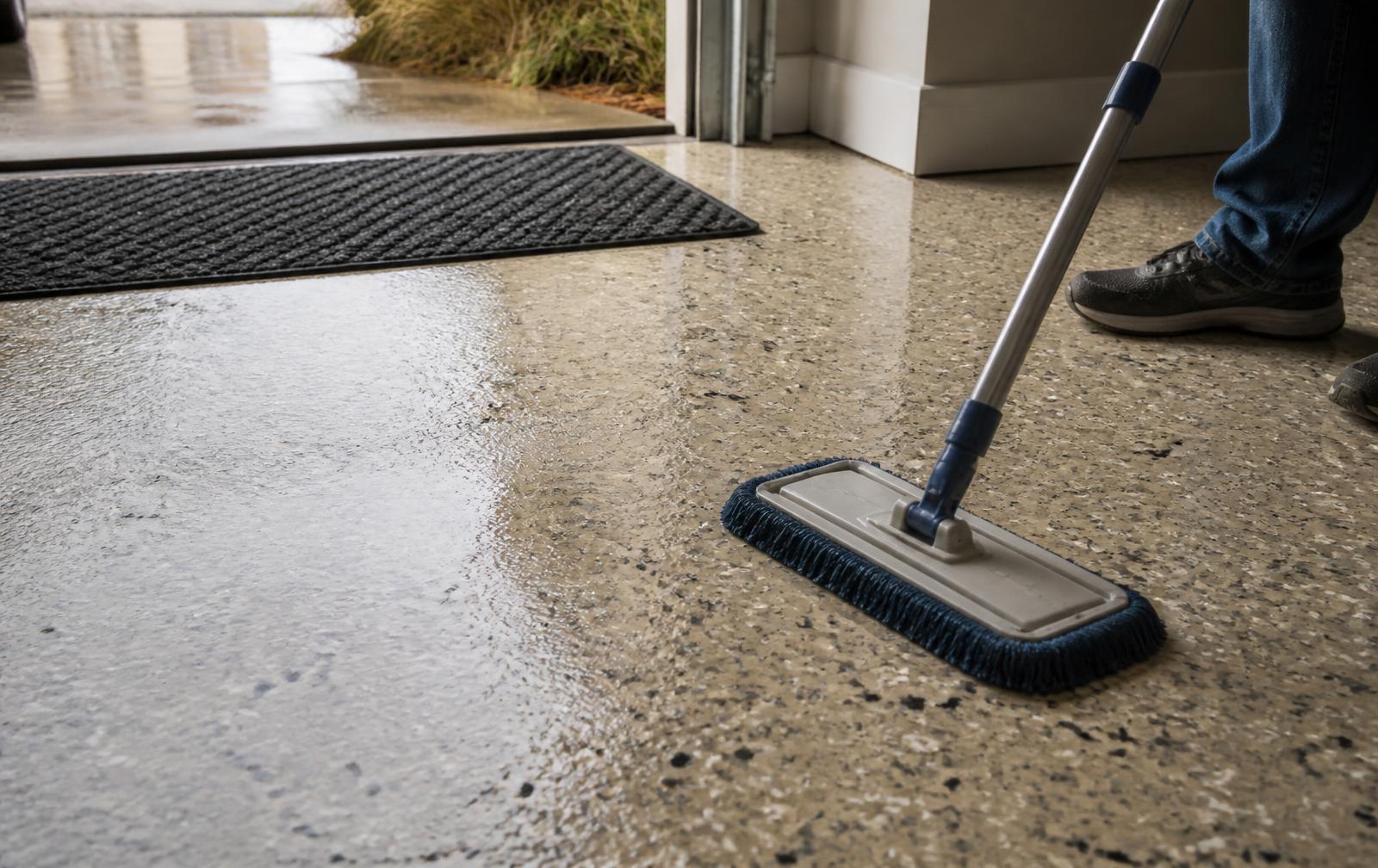
Sweep the floor regularly with a soft-bristle broom or dust mop to remove sand and grit. These particles can act as abrasives under tires or storage containers. For routine washing, use warm water and a small amount of a pH-neutral cleaner with a microfiber mop or soft deck brush.
Clean oil, gasoline, antifreeze, and other spills promptly. Avoid harsh solvents, abrasive powders, steel wool, and aggressive scrub pads, which may dull the finish or damage decorative elements. Never drag heavy equipment across the floor; use suitable pads or lift items when moving them. Place protective pads beneath shelving, workbenches, and cabinets.
Inspect the surface periodically for chips, exposed concrete, or failed sealant around edges, especially after impact or water intrusion. We can assess wear early and recommend targeted repairs or recoating and maintenance rather than waiting for a small defect to spread.
Epoxy Flooring FAQs for Atlantic Beach
What is the average cost of epoxy flooring for a garage?
Professional epoxy flooring typically costs $3–$12 per square foot. Basic coatings cost less, while multi-layer systems with crack repair, decorative flakes, moisture testing, and a polyaspartic topcoat cost more.
Local concrete conditions also affect the estimate. We inspect the slab, identify repairs, explain the coating options, and provide upfront pricing before work begins.
How much does it cost to epoxy a 20x20 garage floor?
A 20-by-20 garage contains 400 square feet. At approximately $3–$12 per square foot, professional installation may cost about $1,200–$4,800.
The final price depends on grinding, crack repair, moisture concerns, coating thickness, decorative finishes, and the selected topcoat. We calculate the estimate from the garage’s actual condition rather than using square footage alone.
What factors affect the price of a garage epoxy floor installation?
The main factors include concrete preparation (diamond grinding, cleaning, old coating removal); repairs (cracks, pits, spalling, uneven areas); moisture testing and treatment; the coating system (solid-color, flake, metallic, topcoats); garage size and layout (edges, steps, columns, storage, access); and warranty and installation quality.
We focus on the details that affect performance, including edges, transitions, and surface preparation.
What are the disadvantages of epoxy flooring in a garage?
Epoxy requires careful concrete preparation and controlled installation conditions. Moisture vapor, contamination, or poor adhesion can cause peeling, bubbling, or premature wear. The coating may also become slippery when wet unless we add an appropriate slip-resistant texture.
Epoxy can discolor with prolonged sunlight exposure, and repairs may remain visible if the surrounding coating has faded. Installation also requires curing time. We normally advise keeping vehicles and heavy items off the surface until the coating system has cured according to the manufacturer’s requirements.
Is polyaspartic flooring better than epoxy for a garage?
Neither material is better for every garage. Epoxy generally provides strong adhesion, a thick build, and a broad range of colors and decorative finishes. Polyaspartic coatings cure faster and typically resist ultraviolet exposure better, which makes them useful in garages with significant sunlight or short scheduling windows.
They can also cost more and require precise installation because their working time is limited. We select the system based on the slab, moisture conditions, sunlight, traffic, appearance, and budget. Some projects use epoxy as a base coat with polyaspartic protection on top.
How long does an epoxy garage floor typically last?
A professionally installed epoxy garage floor commonly lasts 10–20 years with suitable maintenance and normal residential use. Heavy vehicle traffic, chemicals, direct sunlight, moisture problems, and inadequate preparation can shorten its service life.
We recommend cleaning spills promptly, avoiding harsh abrasives, and using suitable pads under heavy equipment. Proper preparation, crack repair, and a compatible topcoat provide the foundation for long-term performance.