Epoxy Flooring Contractor · Myrtle Beach, SC
Epoxy Floor Recoating & Maintenance in Myrtle Beach, SC
Built to Perform. Finished to Impress.
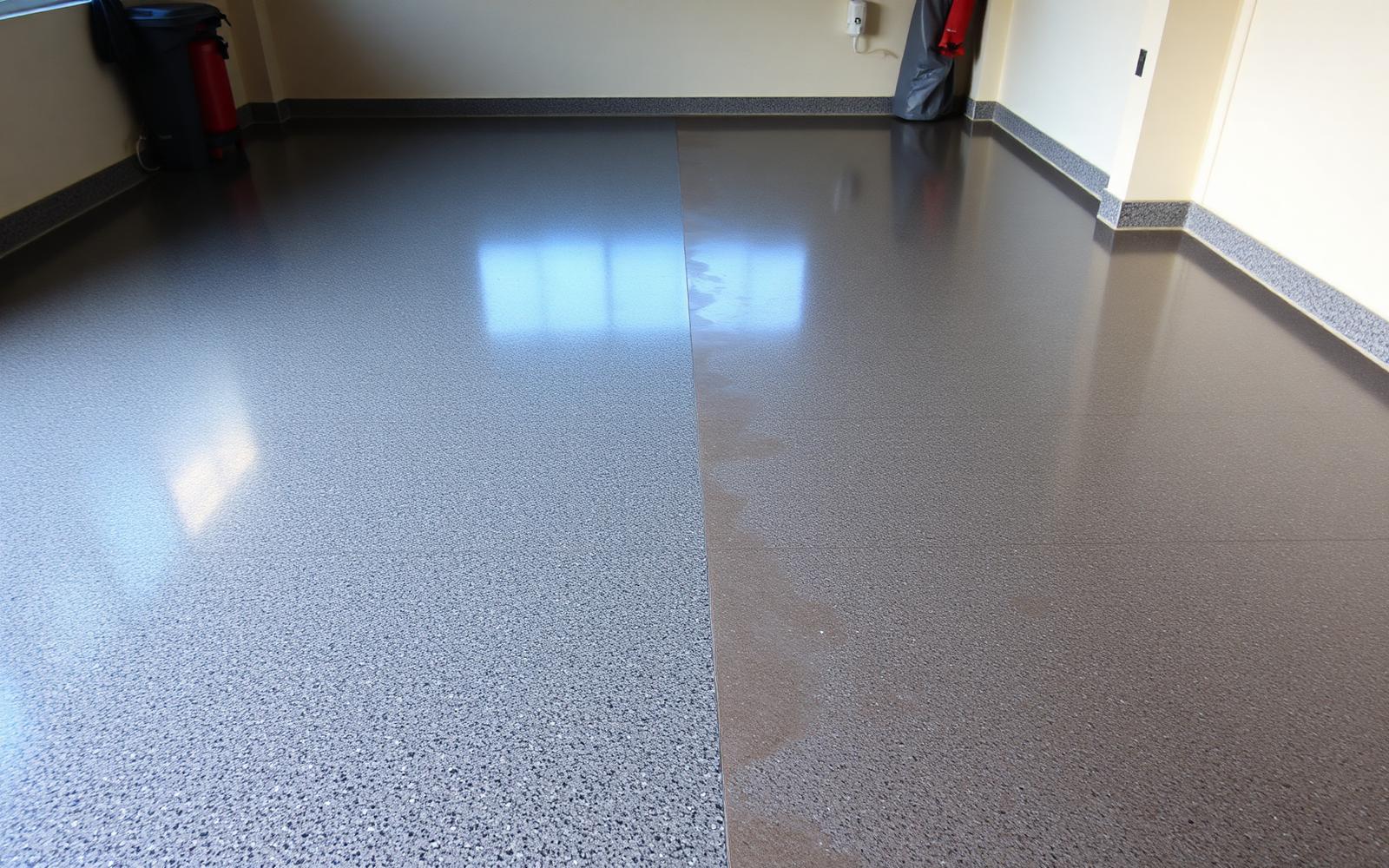
At Expert Epoxy Installation Myrtle Beach we know that recoating makes sense when the existing finish shows wear, fading, peeling, stains, or reduced traction, but the concrete remains structurally sound. We evaluate the floor before recommending an epoxy system, metallic or decorative flake finish, solid-color coating, or polyaspartic topcoat.
- 20+ years of flooring experience
- Epoxy, polyaspartic & polyurea systems
- Honest, upfront pricing
- Serving the Grand Strand
- 20+ years of flooring experience
- Honest, upfront pricing
- Epoxy, polyaspartic & polyurea systems
- Serving the Grand Strand
Epoxy Floor Recoating & Maintenance in Myrtle Beach, SC
Each option offers different benefits for appearance, cure time, chemical resistance, and traffic demands.
Myrtle Beach’s coastal humidity, salt air, sandy soils, and heavy summer traffic can challenge concrete floors. We help homeowners and businesses protect garages, patios, warehouses, showrooms, and other high-use spaces with carefully selected coating systems and detailed surface preparation.
Our maintenance approach also considers how you use the space. A residential two-car garage may need protection from hot tires, oil, and stored equipment, while a commercial floor may require stronger resistance to forklifts, chemicals, moisture, and frequent cleaning.
How Do We Evaluate A Floor Before Recoating?
We match the coating system to the slab’s condition, traffic, moisture exposure, and intended use. Proper testing, mechanical preparation, and controlled curing determine whether a recoated floor performs reliably in a Myrtle Beach home, garage, retail space, warehouse, or service facility.
Which Epoxy, Polyaspartic, And Epoxy-Flake Systems Do We Use?
We use 100% solids epoxy when we need strong adhesion, chemical resistance, and a substantial build. It suits garages, workshops, utility rooms, and commercial slabs, but it requires accurate mixing and sufficient cure time.
Polyaspartic coatings cure faster and generally offer better resistance to ultraviolet exposure than standard epoxy. They work well for recoats, broadcast-flake floors, driveways, and spaces that need a shorter installation window. We still control temperature and moisture because rapid cure can make application defects more difficult to correct.
Epoxy-flake systems combine a base coat, vinyl flakes, and a clear protective topcoat. Partial, medium, or full flake coverage can improve appearance and help conceal minor surface variation, while the broadcast texture can improve traction when we select the right aggregate and finish. Homeowners upgrading a worn floor often pair a recoat with Surfside Beach.
Why Do Moisture Testing, Profile, And Adhesion Standards Matter?
Before recoating, we inspect cracks, delamination, oil contamination, previous coatings, expansion joints, and areas exposed to standing water. We remove weak material and use diamond grinding or other mechanical methods to create a clean, textured concrete surface; acid washing alone does not provide consistent preparation.
We also test for moisture vapor transmission when the slab’s age, location, or history warrants it. Excess vapor pressure can cause blistering or debonding beneath an otherwise well-applied coating. New concrete must reach an appropriate cure condition, and we document repairs before applying primer or body coats.
A successful recoating requires a sound substrate, adequate surface profile, and clean bond line. We do not apply over flaking paint, curing compounds, embedded oil, or visibly damp concrete without correcting the cause first, whether the project is Murrells Inlet or a warehouse slab closer to town.
How Do Humidity, Salt Air, And UV Exposure Affect Coated Floors?
Myrtle Beach’s coastal climate creates several maintenance concerns: humid air, summer heat, salt carried by wind and vehicles, rainwater, and strong sunlight. Garages near the coast can also receive sand and salt residue from tires, which may abrade the finish and carry moisture onto the slab.
We schedule installation around slab temperature, dew point, and weather conditions rather than relying only on the outdoor forecast. The surface must remain above the dew point during application and early cure to reduce the risk of condensation, whitening, or poor adhesion.
For exterior or sunlit areas, we typically specify a UV-stable polyaspartic or compatible aliphatic topcoat. We recommend prompt removal of sand, fertilizer, oil, and standing water, plus periodic cleaning with a non-abrasive product that does not leave a slippery film.
How Do Film Thickness, Cure Times, And Service Life Compare?
We select film thickness according to use. A light-duty residential recoating may need a primer and one or more finish coats, while garages with hot tires, turning loads, tools, and chemical exposure often need a thicker broadcast or multi-coat system. Commercial floors may require additional build, joint treatment, and a chemical-resistant topcoat.
Cure times vary by product, temperature, humidity, and slab conditions. We follow the manufacturer’s recoat window and keep foot traffic, vehicles, water, and chemicals off the surface until the system reaches the specified cure stage.
Expected service life depends on preparation, traffic, sunlight, moisture, cleaning, and maintenance. We help property owners plan periodic inspections and recoats before wear reaches the concrete, preserving edges, transitions, and high-traffic lanes instead of waiting for widespread failure.
How Do We Plan Maintenance For Residential And Commercial Floors?
We plan maintenance around traffic, moisture, chemicals, cleaning equipment, and the coating system itself. In Myrtle Beach, salt air, tracked-in sand, humidity, and occasional storm debris can affect both residential and commercial floors.
How Do Garage Layouts, Traffic Zones, And Flake Options Change Maintenance?
We divide a garage into practical zones before selecting an epoxy or polyaspartic system. Vehicle parking, workbenches, storage areas, entry doors, and walkways receive different levels of traffic and may need different cleaning routines.
A full-broadcast decorative flake system can help conceal minor dust and tire marks while adding texture. Solid-color epoxy creates a cleaner visual field but may show dirt, scratches, and uneven concrete more readily. We recommend slip-resistant aggregate near doors, drains, and work areas, especially where rainwater or vehicle moisture enters, a common request for Carolina Forest.
Use rubber-backed mats at entrances, but avoid mats that trap moisture against the coating. Keep heavy shelving on protective feet, lift—not drag—equipment, and place drip trays beneath vehicles or lawn equipment.
What Do Retail, Hospitality, Warehouse, And Healthcare Floors Require?
Commercial floors need a maintenance plan based on operating hours and contamination risks. Retail and hospitality spaces often require frequent dust mopping, prompt spill removal, and cleaning products that will not leave a film or dull the finish.
Warehouses need attention to forklift routes, pallet-drop areas, loading docks, and turning zones. We specify coatings according to abrasion, impact, chemical exposure, and required cure time. A high-build epoxy may suit some interior areas, while polyaspartic or polyurethane topcoats can improve return-to-service timing and UV stability.
Healthcare spaces require seamless, cleanable surfaces, coved transitions where specified, controlled dust, and disinfectant compatibility. Facility managers should document cleaning chemicals, equipment, traffic changes, and coating damage so we can adjust the maintenance schedule.
What Cleaning Methods, Spill Response, And Recoat Timing Do We Recommend?
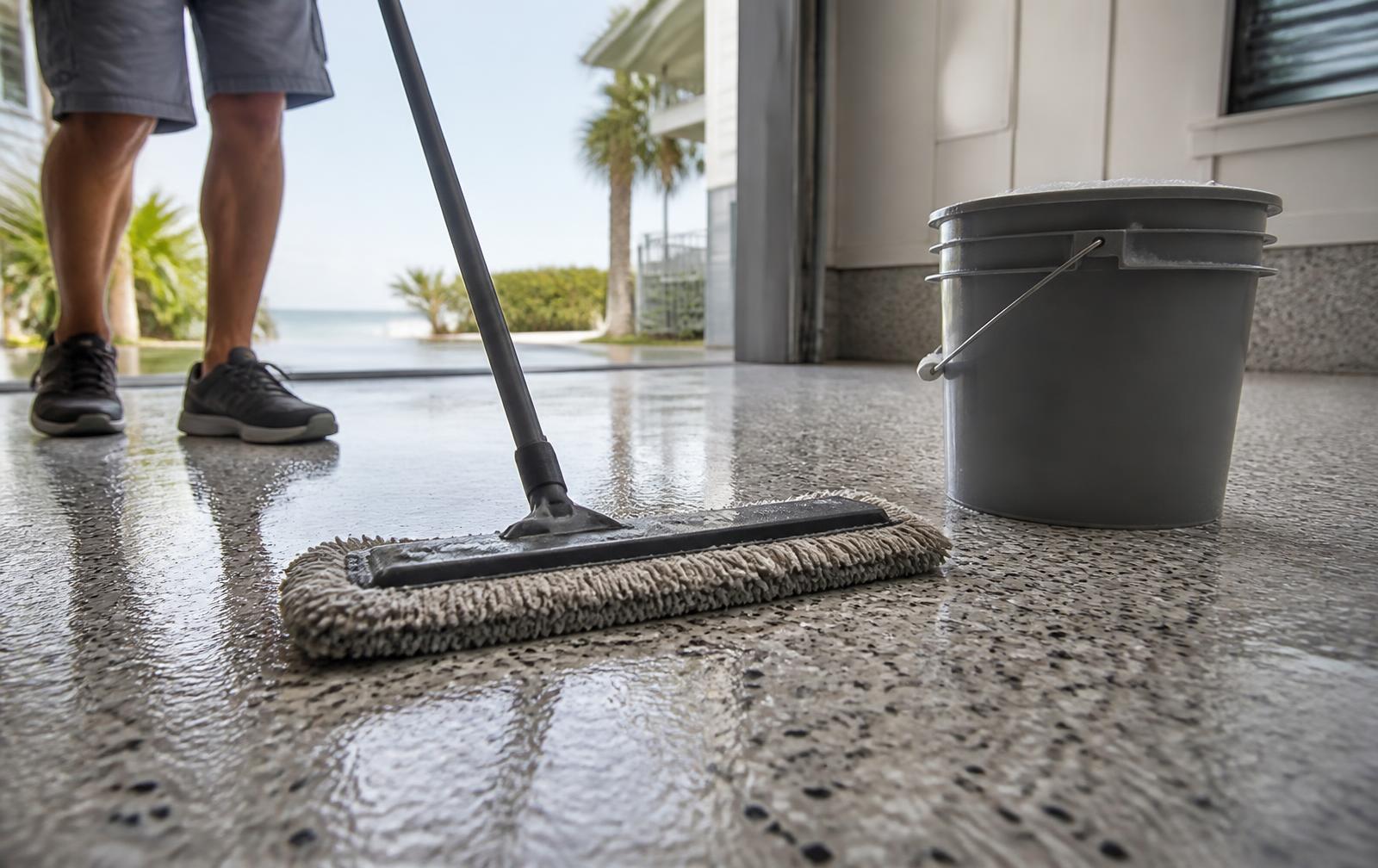
Remove loose grit with a soft-bristle broom, dust mop, or vacuum fitted for hard floors. Clean with a neutral-pH product, warm water, and a microfiber mop; avoid abrasive pads, strong solvents, steel wool, and acidic cleaners unless the coating manufacturer approves them.
Blot oil, fuel, chemicals, and food spills promptly. Do not let gasoline, brake fluid, concentrated bleach, or aggressive solvents remain on the surface. Rinse away cleaning residue and allow the floor to dry before placing mats or equipment.
Recoating does not follow one fixed calendar. We evaluate traffic, gloss loss, scratches, adhesion, and chemical exposure. Lightly used residential floors may need only periodic assessment, while busy commercial routes may require earlier maintenance. We test adhesion and prepare the surface before applying a compatible epoxy, polyaspartic, or protective topcoat.
What Signs Show That A Professional Recoat Is Needed?
A professional evaluation becomes appropriate when the floor shows widespread dullness, exposed flakes, deep scratches, peeling, bubbling, cracking, or areas where the concrete absorbs liquids. Localized damage may require cleaning, mechanical preparation, and a spot repair rather than a full recoat.
Watch for tire pickup, persistent stains, loss of texture, and worn traffic lanes near entrances or service counters. These signs often indicate that the topcoat no longer provides adequate protection.
We also inspect moisture-related symptoms, including blisters, whitening, and peeling near exterior doors or slab edges. Before recoating, we identify the cause, verify moisture conditions, repair cracks, remove failed material, and confirm compatibility. Our team explains the required preparation and provides clear pricing before work begins, including for North Myrtle Beach .
Areas we serve
- Carolina Forest
- Socastee
- Forestbrook
- Surfside Beach
- Garden City
- Murrells Inlet
- North Myrtle Beach
- Briarcliffe Acres
- Atlantic Beach
- Little River
Related Services
Ready to plan your floor?
Call (854) 254-6137 or request a free estimate. We review slab condition, scope, and pricing before any work begins.