
Epoxy Flooring Contractor · Garden City, SC
Epoxy Flooring in Garden City
Built to Perform. Finished to Impress.
At Expert Epoxy Installation we help you choose and install a garage floor system that matches your slab, coastal conditions, intended use, and budget. Our process focuses on thorough preparation, crack repair, careful application, and clean finishing details so your coating bonds properly and performs reliably.
- 20+ years of flooring experience
- Epoxy, polyaspartic & polyurea systems
- Honest, upfront pricing
- Serving the Grand Strand
- 20+ years of flooring experience
- Honest, upfront pricing
- Epoxy, polyaspartic & polyurea systems
- Serving the Grand Strand
Epoxy Flooring for Garden City Homes and Businesses
In Garden City, SC, your garage floor faces sand, humidity, vehicle fluids, hot tires, and daily wear. Epoxy flooring creates a seamless, easier-to-clean surface while giving your garage a more finished appearance.
4214 Mayfair St, Suite 215, Myrtle Beach, SC 29577What Are The Benefits Of Epoxy Coatings For Garage Floors?
Epoxy coatings create a sealed, low-maintenance surface that helps protect concrete from common garage damage. With proper preparation and installation, they also improve traction, simplify cleanup, and give garages in Garden City, SC a cleaner finished appearance.
How Durable And Chemical Resistant Is Epoxy?
Epoxy bonds to prepared concrete and forms a hard, non-porous finish. It helps resist wear from vehicles, foot traffic, dropped tools, and rolling equipment while protecting the slab from oil, gasoline, brake fluid, solvents, and other common garage chemicals.
This protection makes epoxy useful for homeowners who park vehicles indoors, perform maintenance, or use their garage as a workshop. The coating also helps prevent spills from soaking into porous concrete, where they can leave persistent stains and odors. Most projects here start as garage epoxy.
Durability depends on more than the coating itself. We inspect the slab, address cracks or moisture concerns, and prepare the surface thoroughly before installation. These steps help the system bond correctly and support the long-term performance of the finished floor.
How Does Epoxy Improve Safety And Cleaning?
A properly selected epoxy system can improve garage safety by providing a more uniform walking surface than worn or stained concrete. We can discuss slip-resistant additives that add texture without making the floor unnecessarily difficult to maintain, which is especially useful where rainwater or vehicle moisture may enter the garage.
The sealed surface also makes routine cleaning more straightforward. Most dust, dirt, and minor spills can be removed with a broom, microfiber mop, or mild cleaner. Because the coating limits absorption, oil and chemical spills should be cleaned promptly but typically require less effort than they would on unfinished concrete.
We also focus on clean edges, transitions, and finishing details during installation. Careful workmanship helps produce a neat surface that fits the garage’s use, appearance, and maintenance needs.
How Do You Choose The Right Garage Floor System?
A suitable garage floor system must match the concrete’s condition, the space’s traffic, and the finish you want. In Garden City, SC, we also consider moisture, humidity, hot tires, vehicle fluids, and sunlight near open garage doors.
Which Epoxy Types And Decorative Finishes Are Available?
We typically compare 100% solids epoxy, water-based epoxy, and hybrid systems. Solid epoxy builds a thicker film and generally provides better resistance to abrasion, chemicals, and vehicle traffic. Water-based products may cost less and produce fewer odors, but they usually provide a thinner coating and may require more maintenance. We select the system based on the garage’s use, concrete condition, cure schedule, and budget.
Decorative broadcast flakes can improve appearance while adding texture that helps conceal minor marks. We can apply partial or full flake coverage, then install a clear polyaspartic or polyurethane topcoat when the floor needs stronger UV and chemical resistance. These topcoats also make routine cleaning easier, and many homeowners choose decorative flake.
Color, flake blend, gloss level, edge detail, and slip resistance all affect the finished result. We explain the options and provide an upfront estimate before work begins, helping homeowners choose a personalized system without unnecessary upgrades.
What Surface Preparation Does The Slab Require?
Preparation determines whether the coating bonds properly. We begin by removing oil, grease, dirt, curing compounds, and loose materials. We then inspect for cracks, spalling, uneven areas, previous coatings, and moisture concerns.
Mechanical preparation, such as diamond grinding or shot blasting, opens the concrete’s surface and creates a stronger bonding profile than simple cleaning alone. We repair suitable cracks and damaged areas before coating, while larger movement or structural problems may require separate concrete work. Rough or contaminated slabs often need dedicated concrete grinding.
Moisture matters in coastal South Carolina. We check for conditions that could cause blistering or adhesion failure and recommend moisture testing when the slab, history, or environment raises concerns. We also protect walls, cabinets, doors, and adjacent surfaces, then address edges, transitions, and floor penetrations carefully.
Our installation process emphasizes clean, organized workmanship and the details others may overlook. We explain preparation, materials, curing time, and project scope clearly before installation begins.
What Installation Considerations Matter In Garden City, SC?
Garden City’s coastal moisture, temperature changes, and concrete condition can affect how well a garage coating bonds and cures. We plan the installation around slab moisture, weather conditions, preparation requirements, and the time needed before you return vehicles or stored items to the garage.
How Do Humidity And Temperature Affect The Coating?
High humidity and moisture beneath a concrete slab can interfere with epoxy adhesion and cause peeling or bubbling. Before coating, we inspect the garage for visible dampness, drainage concerns, cracks, stains, and areas where moisture may enter through the slab or walls. When appropriate, we recommend moisture testing before selecting an installation system.
Temperature also affects curing. We schedule work when the concrete and surrounding air fall within the coating manufacturer’s specified range, avoiding unusually cool nights, extreme heat, rain, or heavy coastal moisture. We use diamond grinding or other suitable preparation methods to remove weak surface material and create a dependable bonding profile.
We also repair cracks and address rough edges before applying the coating through crack repair . With more than 20 years of flooring experience, we explain any preparation needs and provide upfront pricing before work begins.
What Does The Professional Installation Timeline Look Like?
Most residential garage coating projects take one to two days, depending on the garage size, concrete condition, repairs, coating system, and design. Preparation typically includes removing surface contaminants, grinding the slab, repairing suitable cracks, cleaning dust, and checking the floor before the base coat goes down.
We then apply the selected epoxy or polyaspartic layers according to the product requirements. Polyaspartic systems may support a faster return to service, but curing time still depends on temperature, humidity, ventilation, and the manufacturer’s instructions.
We provide specific access instructions after installation. Many floors allow foot traffic after approximately 24 hours, while vehicles may require additional time. We keep the work area organized, protect surrounding property, and review the finished edges, transitions, and surface before completing the project.
How Do You Maintain The Floor Long Term?
Regular cleaning removes grit and chemical residue that can wear the coating, while simple precautions help protect areas exposed to vehicle traffic, tools, and coastal moisture. We recommend prompt spill cleanup, suitable cleaning products, and practical protection beneath heavy or sharp objects.
What Routine Cleaning Practices Do You Recommend?
Sweep or dust-mop the garage floor regularly to remove sand, road grit, and small stones that can scratch the surface under tires. Garden City’s coastal conditions can bring additional sand into garages, so clean entry points and garage thresholds frequently.
For routine washing, use warm water with a small amount of pH-neutral floor cleaner and a soft mop or microfiber pad. Avoid abrasive powders, steel wool, harsh solvents, and highly acidic cleaners, which can dull the finish or affect its appearance. Rinse away cleaner residue and allow the floor to dry before parking a vehicle.
Clean oil, gasoline, antifreeze, salt, and other automotive fluids as soon as possible. Use an absorbent material for fresh spills, then wash the area with the recommended cleaner. Do not drag jacks, stands, shelving, or heavy equipment across the coating; lift them or use suitable protective pads.
How Do You Protect High-Traffic Areas?
Place durable, non-staining mats at entry doors and beneath work areas to reduce the amount of sand, water, and automotive residue carried onto the floor. Choose mats with backing approved for coated floors, since some rubber products can discolor the surface over time.
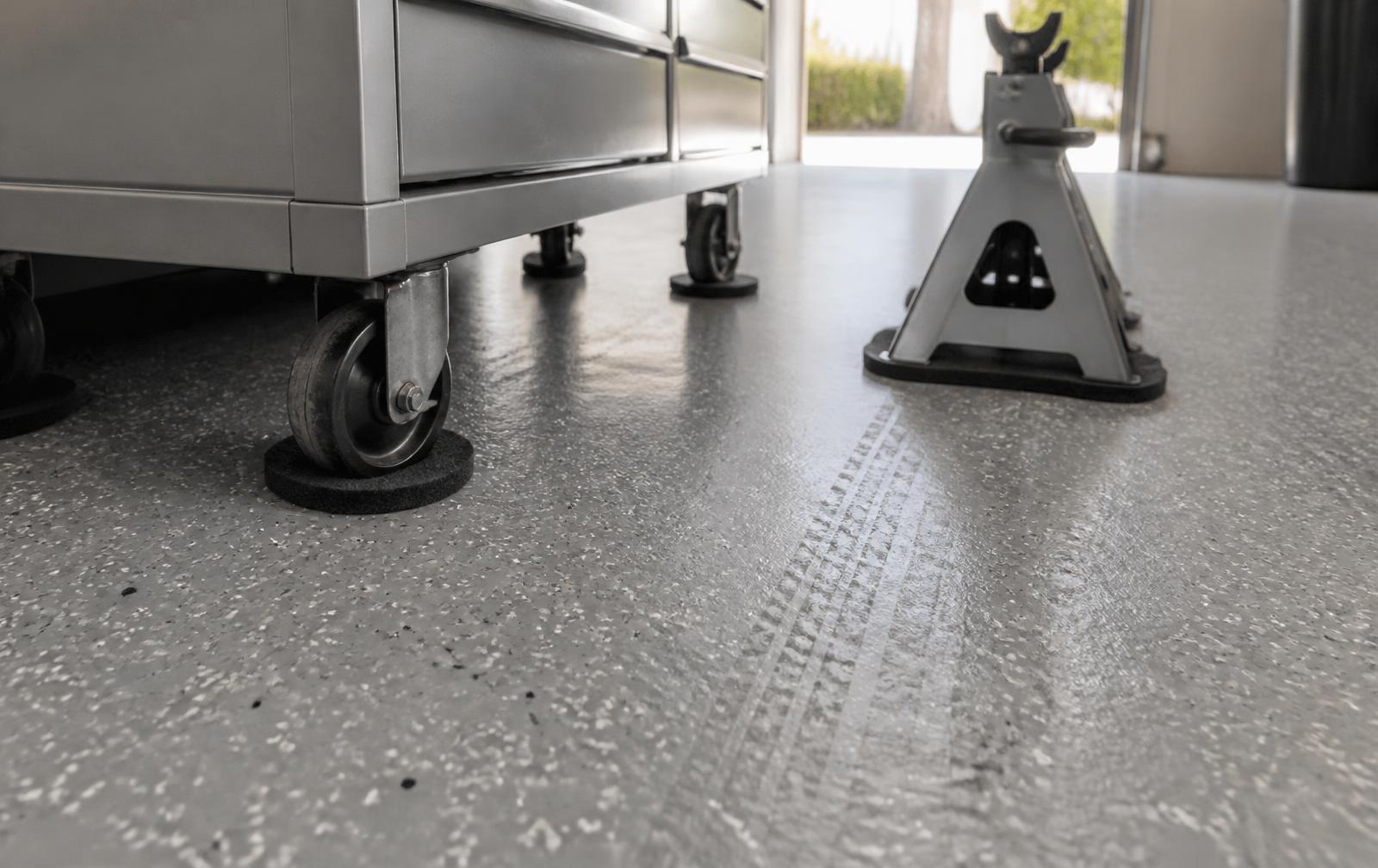
Use load-distribution pads beneath vehicle jack stands, motorcycle kickstands, tool chests, and storage racks. Keep sharp metal edges from contacting the coating, and lift equipment instead of sliding it. Check protective pads periodically for trapped grit or moisture.
Tire softeners, hot tires, and repeated turning can place added stress on garage-floor coatings. Park only after the coating has fully cured according to the installer’s instructions, and avoid spinning tires in place. Inspect busy areas occasionally for scratches, chips, or separated edges so we can address minor damage through recoating and maintenance before moisture reaches the concrete.
Epoxy Flooring FAQs for Garden City
How much does epoxy garage flooring typically cost in Garden City, SC?
For a standard two-car garage of about 400–500 square feet, professional installation commonly costs $2,000–$4,500 for a 100% solids epoxy system, including surface preparation. Polyaspartic systems often cost about $3,000–$5,500 for the same area.
Your estimate may increase if the concrete needs extensive crack repair, moisture treatment, grinding, or removal of an existing coating. We inspect the floor and provide upfront pricing based on the actual preparation and coating requirements.
What is the best type of epoxy coating for a garage floor in a coastal climate?
We typically recommend a professionally installed, high-solids epoxy system with a UV-stable polyaspartic or polyurethane topcoat. Epoxy provides a strong bond and decorative finish, while the topcoat improves resistance to sunlight, abrasion, chemicals, and moisture.
In Garden City, we also check for moisture vapor and salt-related contamination before coating. Diamond grinding and thorough cleaning help the system bond to the concrete instead of trapping surface problems beneath it.
How long does it take to install an epoxy garage floor?
Many standard garage installations take about one to two days, depending on the coating system, floor condition, repairs, and weather. Fast-curing polyaspartic systems may allow quicker return to light foot traffic, but the manufacturer’s cure schedule still controls when vehicles can return.
We prepare the concrete before applying the coating. Homeowners should keep the garage clear and avoid driving on the finished floor until we confirm that it has cured fully.
How durable is epoxy flooring for garages with heavy vehicles and frequent use?
A properly prepared and installed epoxy floor handles vehicle tires, routine foot traffic, oil, automotive fluids, and common garage spills. It also creates a sealed surface that makes stains easier to remove than they are on untreated concrete.
Durability depends on concrete condition, coating thickness, preparation, and maintenance. We repair cracks, mechanically profile the surface, and pay attention to edges and transitions so the coating has a better chance of performing under regular use.
What should I look for when choosing a local epoxy flooring contractor?
Ask whether the contractor mechanically grinds the concrete, repairs cracks, tests for moisture, and explains the complete coating system. Confirm the products, number of coats, cure times, warranty terms, and total price in writing.
We also recommend checking experience, communication, cleanliness, and local references. Our team brings more than 20 years of flooring experience, provides detailed estimates, and treats preparation and finishing work as important parts of the installation.
How do I maintain and clean an epoxy-coated garage floor?
Sweep or dust-mop the floor regularly to remove sand and grit that can dull the finish. Clean spills promptly with a soft mop, warm water, and a mild, non-abrasive cleaner.
Avoid harsh solvents, abrasive powders, steel wool, and stiff brushes unless the coating manufacturer approves them. Use protective pads under equipment, avoid dragging heavy items across the surface, and rinse away salt or beach sand that vehicles track into the garage.