Epoxy Flooring Contractor · Myrtle Beach, SC
Polyaspartic & Polyurea Floor Coatings in Myrtle Beach, SC
Built to Perform. Finished to Impress.
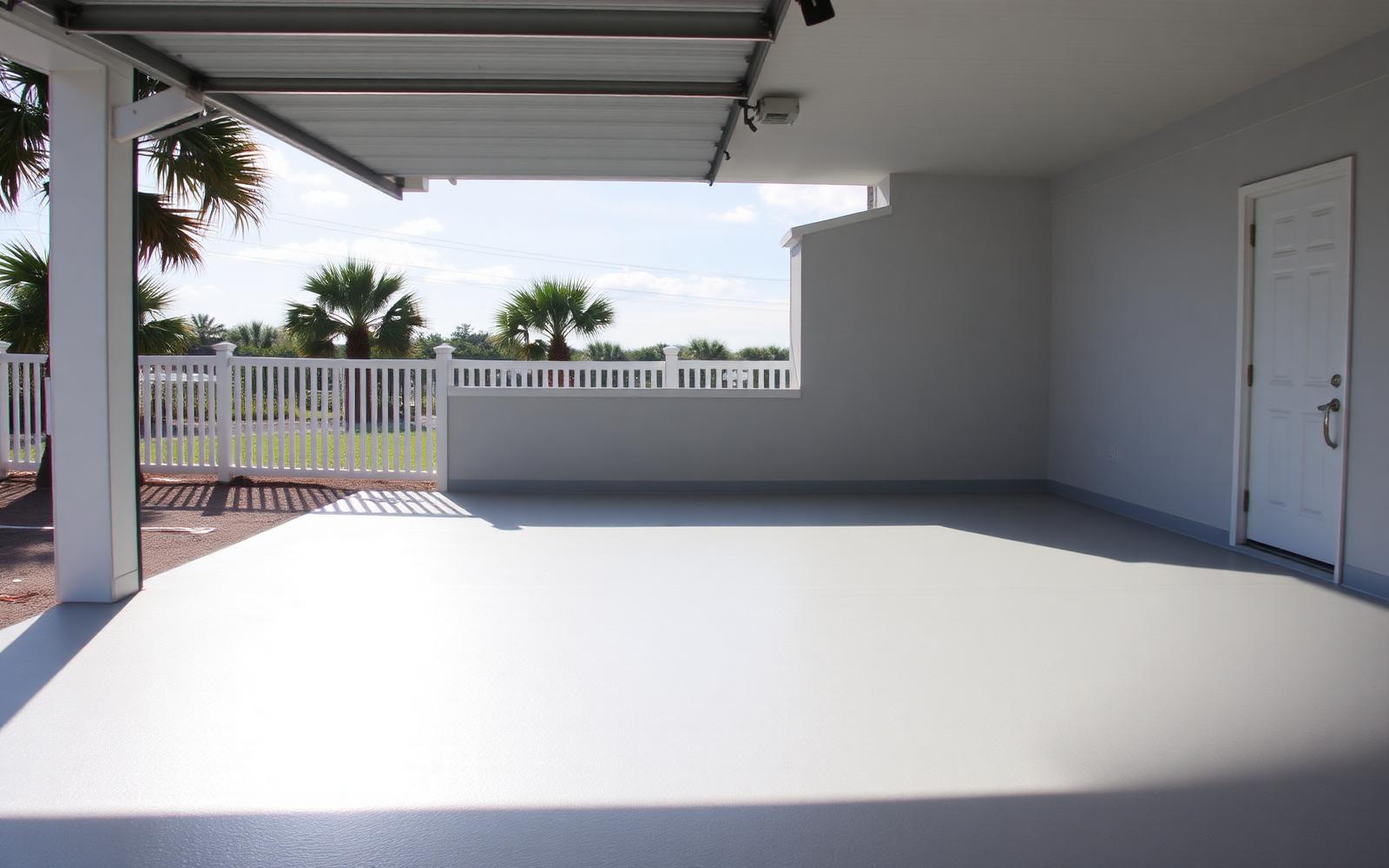
At Expert Epoxy Installation Myrtle Beach we install polyaspartic and polyurea floor coatings for garages, patios, pool decks, warehouses, retail spaces, and other residential or commercial areas across the Grand Strand. Myrtle Beach’s coastal climate exposes concrete to humidity, moisture vapor, salt air, sunlight, and heavy use.
- 20+ years of flooring experience
- Epoxy, polyaspartic & polyurea systems
- Honest, upfront pricing
- Serving the Grand Strand
- 20+ years of flooring experience
- Honest, upfront pricing
- Epoxy, polyaspartic & polyurea systems
- Serving the Grand Strand
Polyaspartic & Polyurea Floor Coatings in Myrtle Beach, SC
Polyaspartic and polyurea systems often suit Myrtle Beach properties because they cure quickly, resist UV yellowing, and provide strong protection against moisture, oil, chemicals, tire marks, and traffic.
With more than 20 years of flooring experience, we evaluate your concrete, repair cracks, prepare the surface, and plan details such as garage storage, vehicle clearance, walkways, drainage, transitions, and commercial traffic patterns.
Which Coating Systems, Performance, And Coastal Climate Considerations Apply?
We match the coating system to the concrete condition, traffic level, appearance goals, and exposure to moisture, chemicals, sunlight, and vehicle use. Proper preparation, moisture evaluation, product selection, and installation technique determine whether a floor performs reliably in a Myrtle Beach home, garage, shop, or commercial facility.
Polyaspartic And Polyurea Chemistry
Polyurea and polyaspartic coatings use reactive resin systems that cure faster than traditional epoxy. Polyaspartic coatings are a type of polyurea, modified to provide workable application time, strong adhesion, and improved resistance to ultraviolet exposure. Their rapid cure can support a shorter installation schedule, but it also leaves less room for errors during mixing, spreading, edging, and broadcasting decorative flakes.
These systems form thin, durable layers over properly prepared concrete. We commonly select them for garages, patios, walkways, showrooms, service areas, and other spaces that need resistance to abrasion, tire traffic, oil, and household chemicals. The final performance depends on diamond grinding or comparable preparation, crack repair, profile, film thickness, temperature, and substrate moisture.
Polyaspartic systems also provide design flexibility. We can use solid colors, full-flake blends, borders, and slip-resistant textures while maintaining a surface that is easier to clean than unfinished concrete.
Epoxy, Quartz, Flake, And Metallic Systems
Epoxy remains useful where we need strong adhesion, chemical resistance, and a broad range of decorative options. It typically cures more slowly than polyaspartic or polyurea, which can allow more working time but may extend the return-to-service period. Epoxy can serve as a primer, build coat, or complete flooring system, depending on the project.
Common system types include:
- Full-flake floors: Vinyl flakes create color variation, help disguise minor surface marks, and add texture when sealed correctly.
- Quartz systems: Colored aggregate increases texture and can support slip resistance in commercial, service, and wet-use areas.
- Metallic epoxy: Pigmented effects create a decorative finish for interiors, showrooms, offices, and finished garages.
- Solid-color coatings: These provide a uniform appearance for utility rooms, workshops, and commercial spaces.
- Broadcast systems: We embed aggregate or flakes into a wet resin layer, then remove loose material and apply a protective topcoat.
We review garage layouts before choosing colors and textures. Cars, storage cabinets, workbenches, floor drains, expansion joints, door thresholds, and wall edges affect both the installation plan and the finished appearance.
Myrtle Beach Humidity, Salt Air, And UV Exposure
Myrtle Beach’s coastal environment brings high humidity, seasonal heat, rainfall, and salt-laden air. These conditions do not eliminate coating options, but they make substrate testing and installation timing important. Concrete must be sufficiently dry, clean, and free from curing compounds, oil, dust, and contaminants before we apply resin.
Direct sunlight can cause some epoxy formulations to amber or lose color over time. For exterior areas and garages with open doors, we often consider a UV-stable polyaspartic topcoat to improve color retention. UV stability does not make a floor immune to fading, so shade, exposure, pigment choice, and maintenance still matter.
Moisture can also move through concrete as vapor. We evaluate visible dampness, drainage, cracks, joints, and the building’s use before recommending a system. In coastal homes and businesses, textured finishes, sealed edges, and prompt cleanup of salt, sand, oil, and standing water help protect the coating and reduce slip risks.
How Do We Plan Garage, Residential, And Commercial Applications?
We plan each coating system around traffic, moisture, sunlight, cleaning demands, and the existing concrete condition. Proper preparation, practical layout decisions, and clear pricing help us deliver durable results for Myrtle Beach homes and businesses.
Garage Layouts And Decorative Flake Options
We evaluate vehicle parking, workbenches, storage cabinets, floor drains, steps, and door clearances before selecting a system. A single-car garage may need a simpler broadcast pattern, while a larger two- or three-car layout can use contrasting borders, walkways, or defined work zones.
Decorative vinyl flakes add texture and help mask minor dirt and routine wear. We can use a partial broadcast, full broadcast, or custom blend with different flake sizes and colors. Gray, tan, charcoal, and blue blends suit many Myrtle Beach homes, but we match the color to cabinets, walls, and vehicles.
Concrete grinding and crack repair remain essential. We also plan clean edges at walls, thresholds, and steps, then explain cure times, vehicle access, maintenance, and the written estimate before work begins.
Residential Spaces Beyond The Garage
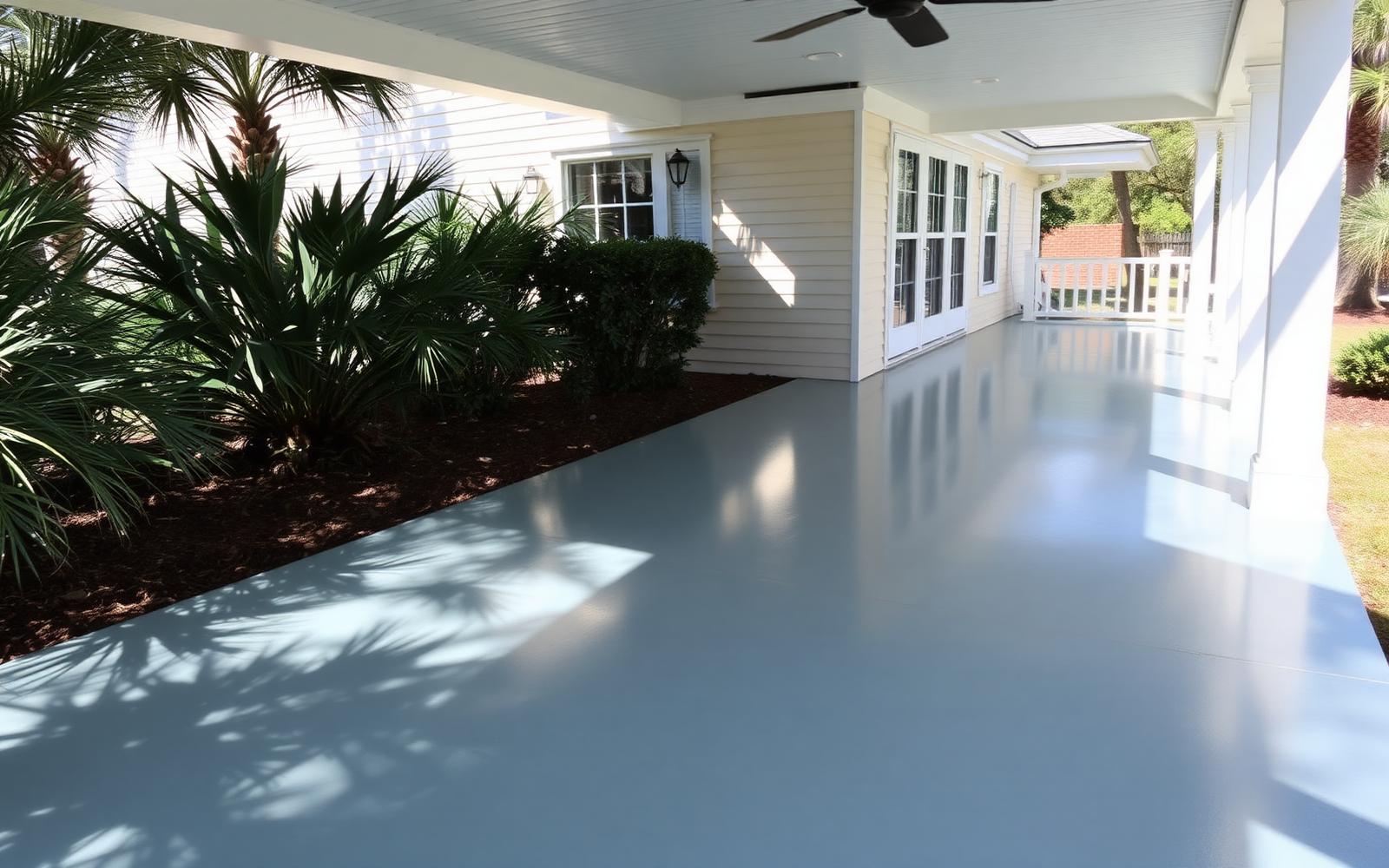
Polyaspartic and polyurea systems can suit more than garage floors. We assess enclosed patios, laundry rooms, mudrooms, basements, workshops, walkways, and selected indoor areas where homeowners need a seamless, cleanable surface.
Outdoor applications require careful attention to UV exposure, rain, humidity, temperature, and surface drainage. We select products and textures appropriate for the location rather than treating an outdoor patio like an interior room. Slip resistance may matter near pool decks, entrances, and areas exposed to water.
We also coordinate transitions between coated concrete and tile, wood, carpet, or existing slabs. Our preparation process addresses stains, pits, cracks, and weak concrete before coating. We keep work areas organized, protect adjacent surfaces, and provide maintenance guidance suited to the finished floor.
Commercial Facilities And Safety Requirements
Commercial planning starts with use and risk. We consider forklifts, carts, vehicle fluids, foot traffic, chemicals, sanitation routines, operating hours, and required downtime. Auto shops, warehouses, showrooms, offices, retail spaces, and light industrial facilities may need different resin blends, build thicknesses, textures, and topcoats.
A commercial floor may require epoxy, polyurea, polyaspartic, or a layered system. Epoxy can provide a strong, attractive base, while polyaspartic or polyurea topcoats can improve UV stability, abrasion resistance, and installation scheduling. We do not specify a product without reviewing the concrete and operating conditions.
We plan safety measures for wet coatings, ventilation, access control, slip resistance, and reopening. Clear scope, upfront pricing, documented preparation, and coordinated scheduling help reduce disruption while maintaining a clean, professional worksite.
Areas we serve
- Carolina Forest
- Socastee
- Forestbrook
- Surfside Beach
- Garden City
- Murrells Inlet
- North Myrtle Beach
- Briarcliffe Acres
- Atlantic Beach
- Little River
Related Services
Ready to plan your floor?
Call (854) 254-6137 or request a free estimate. We review slab condition, scope, and pricing before any work begins.