
Epoxy Flooring Contractor · Briarcliffe Acres, SC
Epoxy Flooring in Briarcliffe Acres
Built to Perform. Finished to Impress.
At Expert Epoxy Installation we know that epoxy flooring can give your Briarcliffe Acres garage a cleaner, more durable surface that stands up to vehicle traffic, oil, moisture, and everyday wear.
- 20+ years of flooring experience
- Epoxy, polyaspartic & polyurea systems
- Honest, upfront pricing
- Serving the Grand Strand
- 20+ years of flooring experience
- Honest, upfront pricing
- Epoxy, polyaspartic & polyurea systems
- Serving the Grand Strand
Epoxy Flooring for Briarcliffe Acres Homes and Businesses
A properly prepared and professionally installed epoxy coating helps protect your concrete while making the garage easier to maintain.
4214 Mayfair St, Suite 215, Myrtle Beach, SC 29577What Are Garage Floor Coating Fundamentals?
A properly installed coating creates a bonded, seamless surface that helps protect concrete from moisture, stains, abrasion, and vehicle traffic. We match the coating system and preparation method to each Briarcliffe Acres garage, its concrete condition, and the way you use the space.
How Do Epoxy Systems Protect Concrete?
Epoxy consists of resin and hardener that chemically react to form a rigid, durable film over prepared concrete. The coating fills minor surface pores and creates a sealed barrier that helps limit penetration from oil, water, automotive fluids, and household chemicals. It also makes routine cleaning easier because dirt and spills remain on the surface instead of soaking into unfinished concrete.
Performance depends heavily on preparation. We inspect the slab, repair suitable cracks, remove contaminants, and use mechanical grinding when needed to create the profile required for proper adhesion. We also address moisture concerns before installation. Most homes start with garage epoxy.
Depending on traffic, exposure, and project requirements, we may recommend an epoxy base with a compatible polyaspartic or polyurethane topcoat for additional UV and abrasion resistance, including polyaspartic coatings.
What Are The Benefits For High-Traffic Garages?
Garage floors in Briarcliffe Acres may experience hot tires, sand, humidity, dropped tools, vehicle fluids, and frequent foot traffic. A professional coating system protects the slab from many of these daily stresses while providing a smooth surface without grout lines or joints that collect debris.
Key benefits include:
- Stain resistance — Oil and common automotive spills can be cleaned before they cause lasting discoloration.
- Simpler maintenance — Sweeping and occasional mopping usually remove everyday dirt.
- Improved durability — Properly selected coatings withstand routine vehicle and pedestrian use.
- Custom appearance — We can help choose colors, decorative flakes, textures, and edge details that suit the garage.
- Safer footing — A broadcast aggregate or compatible additive can improve traction where water or sand may be present.
We explain the scope, preparation, materials, schedule, and pricing before work begins. Our team keeps the area organized and pays close attention to edges, transitions, repairs, and final finish quality.
How Do You Prepare The Surface And Install The Coating?
A durable garage coating depends on a sound concrete slab, thorough preparation, and installation conditions suited to Briarcliffe Acres’ coastal climate. We evaluate moisture and surface defects first, then prepare, prime, and coat the floor according to the concrete’s condition and the selected system.
What Does Concrete Evaluation And Moisture Testing Include?
We inspect the slab for oil, tire marks, old coatings, cracks, spalling, uneven areas, and signs of water intrusion. Concrete must remain structurally sound; epoxy can improve the surface, but it cannot correct ongoing leaks, major settlement, or failing concrete.
Moisture testing helps us identify vapor moving through the slab, which can cause bubbling, whitening, or loss of adhesion. We use an appropriate concrete moisture test and review drainage, wall edges, and expansion joints. If readings exceed the coating manufacturer’s limits, we address the source or recommend a compatible moisture-control system before installation.
We also discuss how you use the garage, including parked vehicles, stored equipment, chemical exposure, and desired appearance. That information helps us select a practical combination of epoxy, decorative flakes, and a protective polyaspartic or polyurethane topcoat.
How Do Grinding, Repair, And Primer Application Work?
We typically use diamond grinding or another mechanical method to remove weak surface material, contaminants, and incompatible coatings. This process opens the concrete’s pores and creates the texture needed for reliable bonding. We do not depend on acid washing alone when the slab requires deeper preparation, so many projects include concrete grinding.
Before coating, we route and fill cracks, repair damaged areas, and address uneven transitions. We vacuum dust carefully and check the floor again because small particles can interfere with adhesion. We protect walls, doors, storage areas, and nearby finishes while keeping the work area organized.
We apply primer or the specified base coat at the manufacturer’s coverage rate. Decorative flakes or pigments follow when selected, and we finish with a compatible clear topcoat. Our estimates explain preparation, repairs, materials, and finish options so the scope remains clear before work begins.
What Curing Conditions Apply In Coastal South Carolina?
Warm temperatures can help materials cure, but coastal humidity and damp concrete require careful monitoring. We check slab and air temperatures, relative humidity, and the dew point before and during installation. The concrete and coating surface should remain sufficiently above the dew point to reduce condensation risk.
We keep the garage closed or controlled as needed to limit windblown sand, insects, and moisture during curing. Rain, open garage doors, and sudden temperature changes can affect the finish, so we may adjust the schedule when conditions fall outside product specifications.
We follow the selected manufacturer’s recoat and return-to-service times rather than relying only on touch. Light foot traffic, vehicle parking, and chemical exposure each require different wait periods. Customers receive clear instructions for ventilation, access, and protecting the new floor during its initial cure.
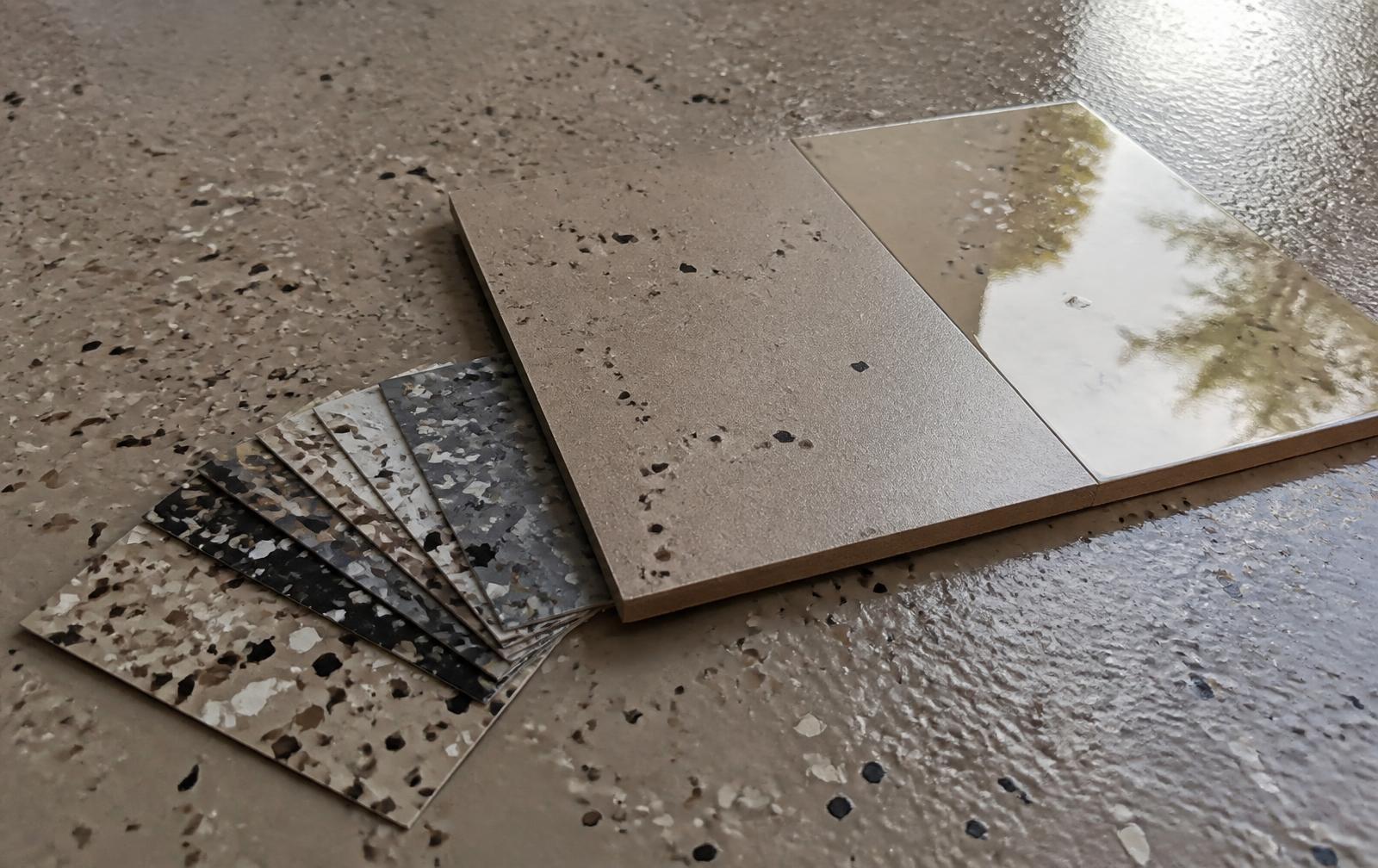
Which Finish Options And Design Choices Fit Your Garage?
We help homeowners select finishes that match the garage’s lighting, storage needs, vehicle use, and maintenance preferences. Solid colors create a clean appearance, while decorative flakes add visual variation; gloss level, texture, and slip resistance also affect daily performance.
How Do Solid Color And Decorative Flake Systems Compare?
A solid-color epoxy system provides a uniform appearance in shades such as gray, tan, white, or darker custom colors. Light gray and tan can make a garage feel brighter, while darker shades may hide some dirt but can show dust and tire marks more clearly. We review the concrete, wall colors, cabinets, and lighting before recommending a color.
Decorative flake systems broadcast vinyl chips into the coating to create a speckled finish. Flakes can add depth, help disguise minor surface marks, and provide a less uniform appearance than a solid color. We can adjust the flake blend, density, and size to suit the space through decorative flake .
Before coating, we repair suitable cracks and prepare the concrete mechanically so the system bonds properly. We also explain the project scope and pricing in advance, helping you choose a design that fits your garage and budget.
How Do Gloss, Texture, And Slip Resistance Differ?
A high-gloss topcoat reflects more light and gives the garage a polished appearance. It also makes the surface easier to wipe clean, but it can reveal dust, tire marks, and surface imperfections more readily. Satin or lower-sheen finishes provide a softer look and may better suit garages used as workshops or utility areas.
Smooth coatings can become slippery when water, snow, or automotive fluids reach the surface. We can add a fine traction additive to improve footing without creating an excessively rough texture. The right amount depends on drainage, vehicle traffic, cleaning habits, and how the garage connects to outdoor areas.
We pay attention to edges, transitions, crack repairs, and the final topcoat. These details help create a consistent finish that performs reliably in Briarcliffe Acres conditions while keeping the work area organized and the installation process respectful of your property.
How Do You Plan Long-Term Care And The Project Itself?
Regular cleaning protects the coating from grit, oil, and moisture, while thoughtful scheduling helps the installation cure properly. We also recommend reviewing costs, preparation needs, and warranty terms before work begins.
What Cleaning And Maintenance Practices Do You Recommend?
We recommend sweeping or dust-mopping the garage floor regularly to remove sand and grit that can dull the surface over time. Clean spills promptly, especially motor oil, gasoline, brake fluid, and household chemicals. Use a pH-neutral cleaner diluted with water and a soft mop; avoid abrasive powders, steel wool, and harsh solvents unless the coating manufacturer approves them.
Place mats at entry points to catch tracked-in debris, but avoid rubber-backed products that may discolor the coating. Use plywood or protective pads beneath jack stands, workbenches, and heavy equipment. Do not drag tool chests or vehicle parts across the floor.
Inspect the surface periodically for chips, peeling, or cracks in the concrete beneath the coating. We can assess minor damage early and recommend a compatible repair through recoating and maintenance before moisture or vehicle traffic expands the affected area.
What Scheduling, Cost, And Warranty Details Matter?
Plan the project around temperature, humidity, and garage access. Briarcliffe Acres’ coastal moisture can affect curing, so we measure the slab and review site conditions before selecting epoxy, polyaspartic, or another compatible system. Keep vehicles, storage items, and foot traffic off the floor for the full period specified by the installer.
Request a written estimate that identifies surface preparation, crack repair, coating layers, color or flake options, edges, cleanup, and warranty coverage. Diamond grinding and thorough repairs often add preparation time, but they help the coating bond to the concrete.
Before signing, confirm what the warranty covers and excludes. Ask about peeling, product defects, moisture-related failures, maintenance requirements, and damage from chemicals or impact. We provide upfront pricing and explain the recommended system so you can compare the project scope rather than relying only on the lowest bid.
Epoxy Flooring FAQs for Briarcliffe Acres
How much does epoxy garage flooring typically cost in Briarcliffe Acres, SC?
Professional epoxy garage flooring commonly costs about $4–$10 per square foot, although local pricing can vary. A typical two-car garage may cost roughly $2,000–$5,000, depending on surface repairs, coating thickness, decorative flakes, moisture mitigation, and the selected topcoat.
We provide an upfront estimate that identifies preparation, materials, labor, and optional upgrades. Comparing written estimates helps prevent confusion about what each installer includes.
What is the best type of epoxy coating for a residential garage?
For most residential garages, we recommend a professionally installed 100% solids epoxy system with a compatible polyaspartic or polyurethane topcoat. The epoxy bonds to prepared concrete, while the topcoat can improve resistance to ultraviolet exposure, abrasion, chemicals, and surface wear.
Decorative vinyl flakes can improve traction and help conceal minor dirt. We select the system based on vehicle use, storage needs, sunlight, moisture conditions, appearance preferences, and budget.
How long does professional epoxy garage floor installation take?
Most projects take two to four days, including preparation, coating application, and curing. Extensive cracks, oil contamination, uneven concrete, or moisture problems can extend the schedule.
We usually keep foot traffic off the floor for about 24 hours after the final coat. Vehicles often need to stay off the surface for 48–72 hours, according to the product system, temperature, humidity, and installer guidance.
How durable is an epoxy floor under vehicle traffic, chemicals, and hot tires?
A properly prepared and installed epoxy floor can handle normal residential vehicle traffic, dropped household items, road salts, oil, gasoline, and many common chemicals. A quality topcoat adds protection against abrasion and hot-tire pickup.
Durability depends heavily on preparation, concrete condition, product quality, and maintenance. We recommend cleaning spills promptly, avoiding harsh solvents unless the coating manufacturer approves them, and using protective pads beneath heavy equipment.
What preparation is required before applying epoxy to a concrete garage floor?
We first remove dirt, oil, coatings, weak concrete, and contaminants. Diamond grinding or similar mechanical profiling opens the concrete pores and creates a suitable bonding surface; acid washing alone may not provide consistent preparation.
We repair cracks and damaged areas, address spalling, and check for moisture concerns before coating. The concrete must be clean, dry, sound, and properly profiled for the system we install.
How can I find reliable local epoxy flooring installers and reviews?
Look for installers with verifiable local projects, detailed written estimates, current insurance, clear warranty terms, and substantial flooring experience. Review photos of completed garages, then check independent sources such as Google Business Profile, the Better Business Bureau, and local community platforms.
Ask who performs the preparation, which products they use, how they handle moisture and cracks, and when you can return vehicles to the garage. We encourage customers to compare communication, workmanship details, cleanliness, and pricing rather than relying on review ratings alone.